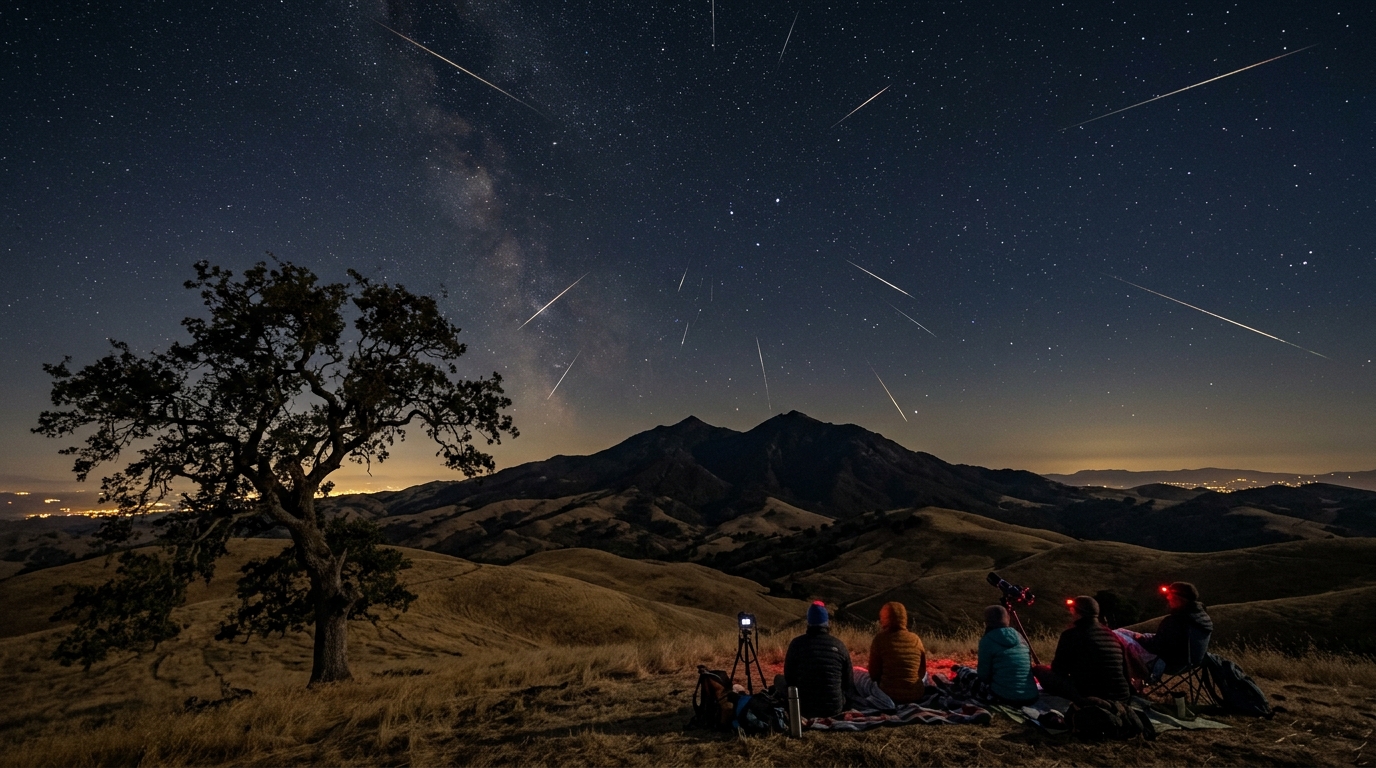
The Perseid meteor shower is one of the most anticipated skywatching events of the year, and 2026 offers unusually favorable conditions for viewers in Contra Costa County. The shower reaches its peak overnight from August 12 into the early hours of August 13, almost exactly when the Moon is new. With little moonlight to wash out faint meteors, a clear, dark location could provide an excellent show.
Mount Diablo is a natural landmark for local skywatchers, but it is important to plan around legal access. The state park’s ordinary vehicle gates close at sunset, so visitors should not drive up expecting to remain after dark unless they have a valid campsite reservation or are attending an authorized astronomy program. Fortunately, you do not need to stand on the summit to enjoy the Perseids. A safe backyard, a legal overnight campsite, private land with permission, or another open location with a broad view of the sky may work well.
This guide explains when to watch, how to choose a location, what to bring, and how to improve your chances without trespassing, blocking roads, or creating wildfire risk.
When and How to Watch the 2026 Perseids
Why the 2026 Peak Should Be Worth Watching
The Perseids are active for several weeks, from mid-July into late August, but activity becomes strongest around the August peak. The meteors come from dust and small particles left behind by comet 109P/Swift-Tuttle. When Earth passes through that debris stream, the particles strike the atmosphere at high speed and produce bright streaks. Some Perseids also create longer-lasting fireballs.
The American Meteor Society lists the peak night as August 12–13, 2026. Under dark rural conditions, normal observed rates near maximum may reach roughly 30 to 50 Perseids per hour, while the theoretical zenithal hourly rate is higher. Viewers near city lights will usually see fewer because the faintest meteors disappear into skyglow, haze, or smoke.
Watch After Midnight and Stay Through the Predawn Hours
Perseids can appear as early as about 10 p.m., but the strongest viewing normally comes after midnight and before dawn. During those hours, the radiant in Perseus rises higher and your location turns more directly into the incoming stream of particles. You do not need to stare at Perseus. In fact, meteors that appear farther away from the radiant often leave longer trails across the sky.
Plan for at least 60 to 90 minutes outside. Your eyes need around 20 to 30 minutes to adapt to darkness, and meteor activity naturally arrives in bursts. Ten quiet minutes do not mean the shower has failed. Put your phone away, avoid white flashlights, and give the sky time.
The exact weather cannot be known far in advance. Low clouds, coastal fog, wildfire smoke, or high thin clouds can reduce visibility even when the astronomical conditions are excellent. Check an hourly forecast and satellite or smoke information on the afternoon of August 12. A backup night on August 11 or 13 can still produce worthwhile activity if the peak night is cloudy.
Choose a Dark Location With Legal Overnight Access
The ideal site has a broad view of the sky, limited artificial light, safe parking, and explicit permission for nighttime use. Do not assume a scenic daytime overlook remains open after dark. Many parks, trailheads, staging areas, and roadside pullouts close at sunset or prohibit overnight parking.
Mount Diablo State Park normally opens at 8 a.m. and closes its arriving gates at sunset. Visitors should be in their vehicles and leaving by sunset unless they are legally staying overnight or participating in an approved event. Review the official Mount Diablo State Park information before planning your trip.
Good alternatives may include your own backyard, a friend’s rural property with permission, a reserved campsite, or a public astronomy event that specifically allows after-dark access. A suburban backyard can still be rewarding if you turn off nearby lights, choose the darkest side of the house, and block direct glare with a fence or building.
Prepare for a Comfortable and Responsible Night
Meteor watching is simple, but comfort matters. Recline and take in as much sky as possible. Once settled, avoid walking through the viewing area or turning on bright lights.
Bring Warm Layers, Water and Low-Light Equipment
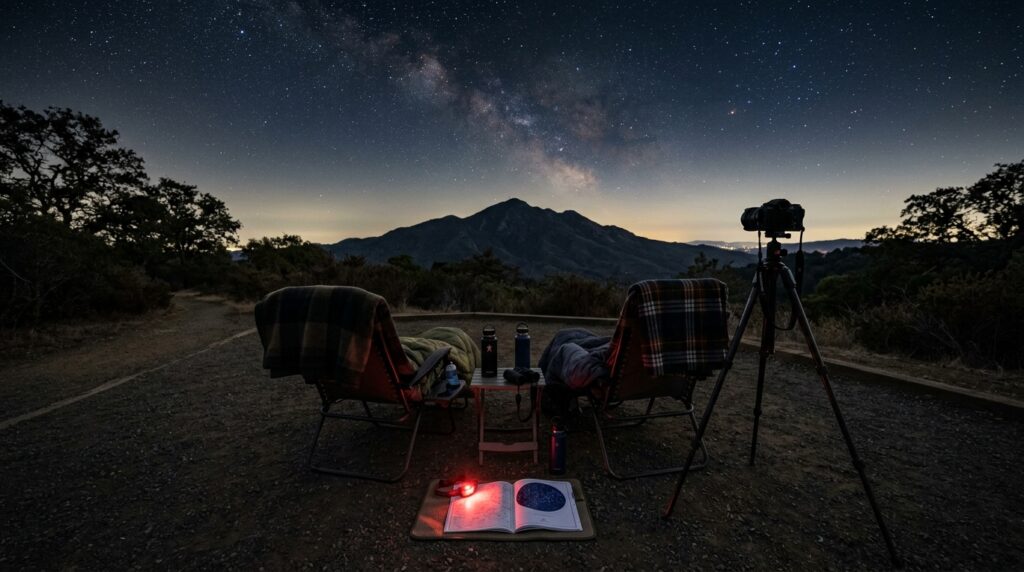
Even after a hot Contra Costa afternoon, exposed hills and valleys can become cool or windy late at night. Bring a folding chair or reclining camp chair, blanket, warm layer, closed shoes, water, snacks, and insect repellent. A red flashlight helps preserve night vision, but keep it dim and point it toward the ground.
Carry a charged phone for emergencies, yet switch the display to its lowest brightness and keep it covered when not in use. Tell someone where you are going and when you expect to return. If you are camping, follow all quiet-hour, food-storage, parking, and fire restrictions.
Dry summer vegetation creates serious wildfire risk. Never use fireworks, candles, portable fire pits, or open flames in an unauthorized area. Do not park over tall dry grass, discard cigarettes, or stop where a hot vehicle component could contact vegetation. If smoke, flames, evacuation warnings, or emergency vehicles appear, leave promptly and follow official instructions.
Use Your Eyes First and Keep Photography Simple
You do not need binoculars or a telescope to watch a meteor shower. Those tools narrow your field of view and make it harder to catch fast streaks. Lie back, face generally toward the darkest open part of the sky, and scan a wide area. If one direction contains a city glow, turn so the glow is behind you or blocked by a hill, tree line, or building.
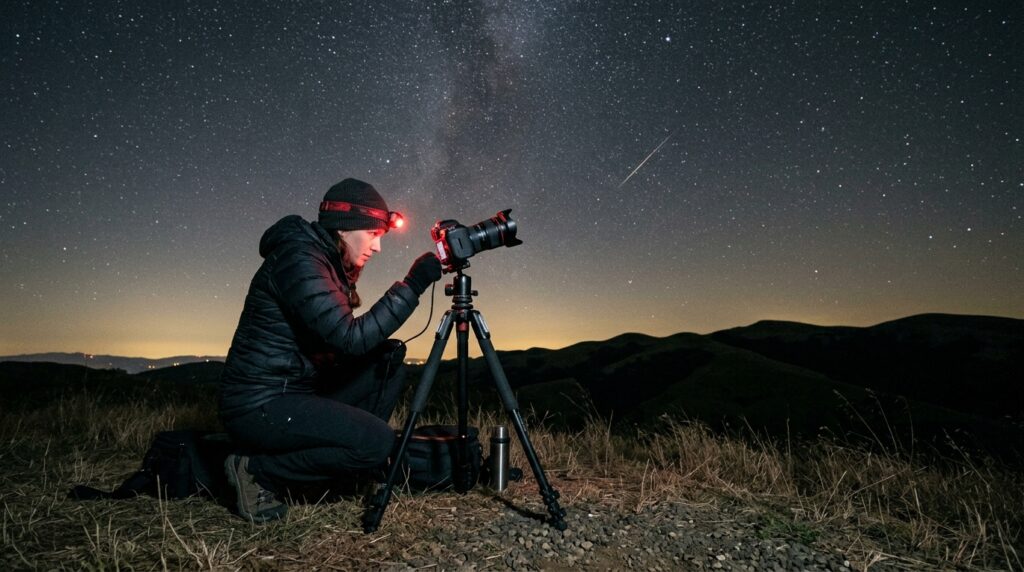
For photography, use a camera with manual controls, a wide-angle lens, a sturdy tripod, and a remote shutter or timer. Start with a wide aperture, a high ISO, and an exposure long enough to record stars without making them excessively blurred. Take repeated frames rather than trying to react after seeing a meteor. Keep expectations realistic: photographing a bright meteor requires patience and luck.
Do not use flash, bright video lights, or headlamps around other observers. If you need to adjust equipment, warn the group and use the dimmest red light available. Respect private property, nearby homes, wildlife, and quiet hours.
How to Build a Safe Mount Diablo Area Stargazing Plan
A practical plan separates daytime Mount Diablo sightseeing from nighttime meteor watching unless you have confirmed overnight access. During the day, you might visit the summit, explore a short trail, or enjoy viewpoints before leaving the park by sunset. Our summer hiking safety guide can help you prepare for heat, dry terrain, and changing park conditions.
After leaving, have dinner, check the latest forecast, and continue only to a location where nighttime access and parking are clearly permitted. Do not improvise by stopping on North Gate Road, South Gate Road, private driveways, narrow shoulders, emergency turnouts, or closed staging areas. A dark location is not worth a collision, citation, tow, or wildfire hazard.
Another option is to attend a Mount Diablo public astronomy program on a scheduled date. The Mount Diablo Observatory Association and Mount Diablo Astronomical Society operate supervised programs at the lower summit parking area. These events provide legal after-dark access, astronomy education, and telescopes, but their dates do not necessarily coincide with the Perseid peak. Follow the event instructions, arrive early, and understand that general park access rules still apply outside the program.
Families can make the evening easier by practicing at home first. Teach children to use red light, remain close to adults, and listen for instructions. Bring a familiar blanket, snacks, and a realistic exit plan. A shorter session may suit young children, while adults seeking stronger activity can stay into the predawn hours.
Combine Daytime Exploring With Legal Night Viewing
If August 12 is cloudy, use the night as a reminder that astronomy depends on conditions. The Perseids remain active before and after the exact peak. Another clear night within a few days may be better than sitting under clouds at the predicted maximum.
You can also make the meteor shower part of a longer Contra Costa County weekend. Visit a morning farmers’ market, spend the afternoon resting indoors, and save your energy for the night. Avoid combining a strenuous all-day hike with several hours of late-night driving and skywatching.
The 2026 Perseids deserve attention because the peak aligns with a nearly moonless sky, but success still depends on weather, darkness, patience, and responsible access. Choose a legal site, arrive before dark when permitted, let your eyes adjust, and stay long enough for activity to build. Most importantly, do not treat Mount Diablo’s summit or roadside overlooks as unrestricted nighttime spaces. Careful planning will protect the landscape, keep roads clear, and give you the best chance of seeing bright Perseids cross the East Bay sky.