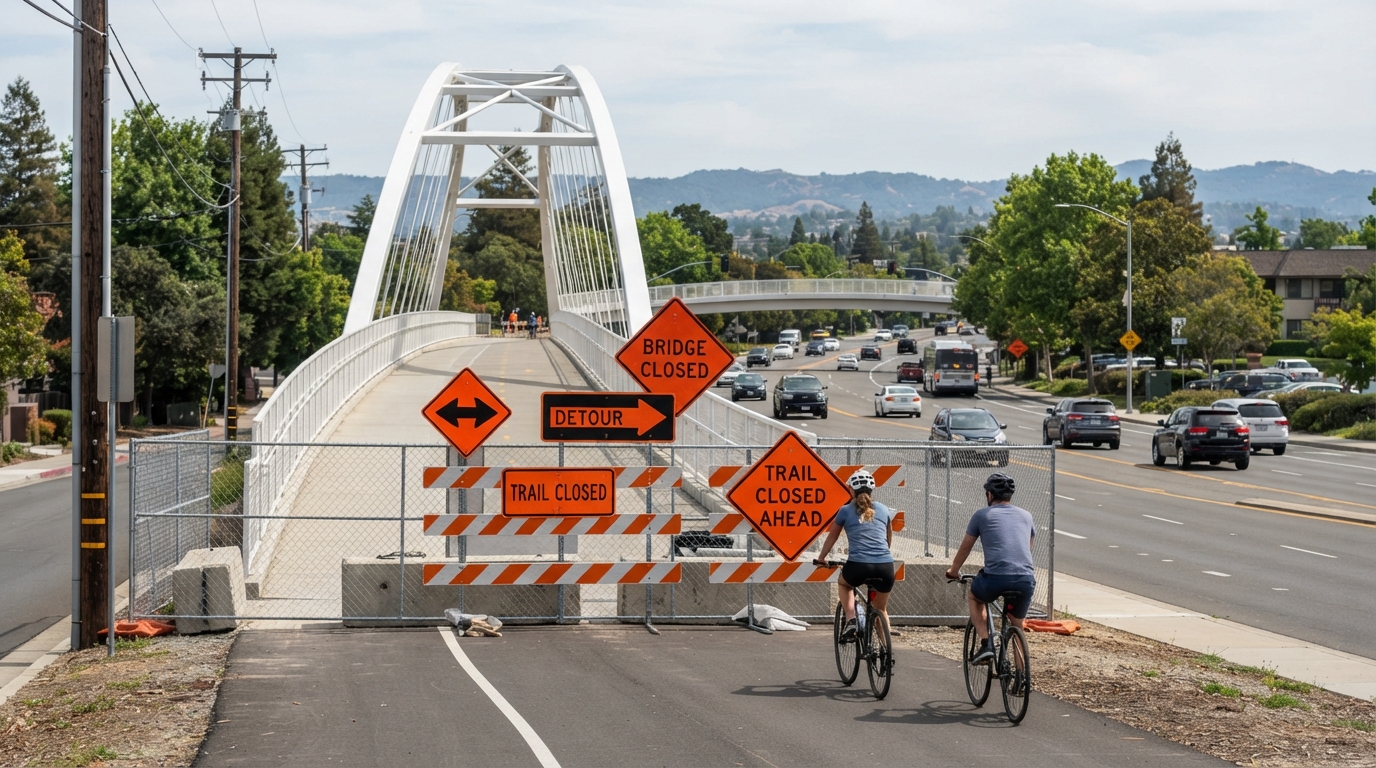
The Iron Horse Trail closure at Treat Boulevard is changing one of central Contra Costa County’s most familiar walking and cycling connections through the end of 2026.
The Robert I. Schroder Pedestrian Bridge in Walnut Creek closed on October 5 for rehabilitation work. The bridge normally carries the Iron Horse Regional Trail above Treat Boulevard, allowing cyclists, runners, commuters, families, and other trail users to cross the busy roadway without mixing directly with street traffic.
During construction, the bridge itself is unavailable. Trail users are being redirected to an existing street-level crossing on Treat Boulevard, with temporary detour signs guiding people around the work area.
The closure is currently expected to continue through December 31, 2026, although construction schedules can change because of weather, unexpected repair conditions, or other project needs.
If the Iron Horse Trail is part of your commute, weekend ride, running route, or family outing, it is worth adjusting the trip before reaching Treat Boulevard rather than being surprised by the closure.
What the Iron Horse Trail Closure Changes in Walnut Creek
The Iron Horse Regional Trail is one of Contra Costa County’s most useful paved recreation and transportation corridors.
The completed trail stretches roughly 32 miles between Concord and Pleasanton, passing through communities including Walnut Creek, Danville, and San Ramon while connecting residential areas, business districts, transit, parks, and other trails.
Most of the trail remains available during the bridge project.
The major interruption is the section where the Robert I. Schroder Pedestrian Bridge crosses Treat Boulevard approximately 0.3 miles east of Interstate 680.
The Bridge Is Closed Through the End of December
Contra Costa County Public Works began the rehabilitation project on October 5, 2026. The current schedule runs through December 31, barring unforeseen circumstances.
The pedestrian bridge will remain closed for the duration of the project rather than reopening each day after construction crews leave.
That detail matters because much of the physical work is scheduled overnight. Someone seeing that crews normally work between 9 p.m. and 5 a.m. might incorrectly assume the bridge is open during daytime hours.
It is not.
Walkers and cyclists should plan on the signed detour every time they reach this section until officials announce that the bridge has reopened.
The Street-Level Crossing Temporarily Replaces the Bridge
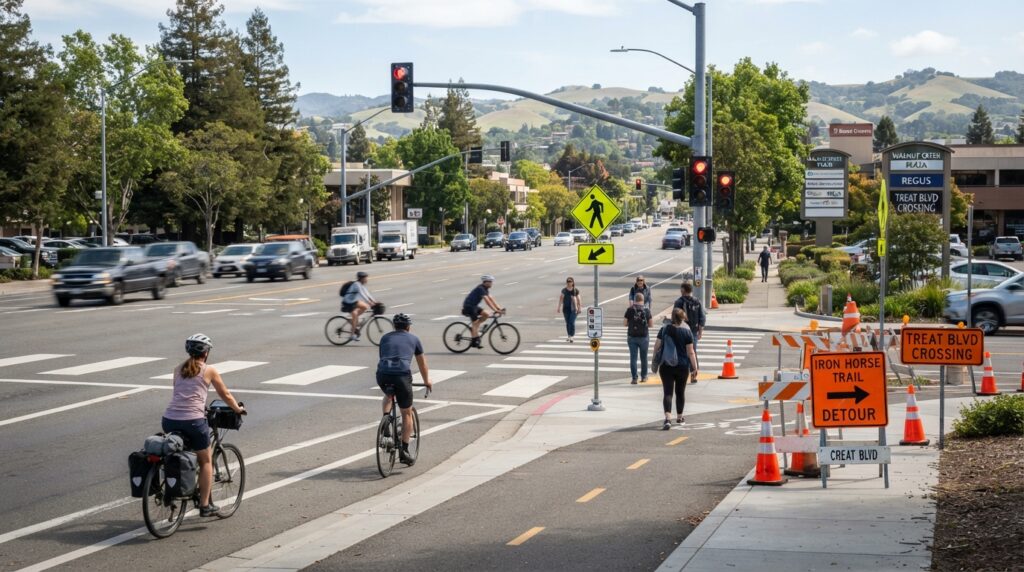
During the Iron Horse Trail closure, pedestrians and cyclists are being directed to the existing street crossing on Treat Boulevard.
This changes the experience significantly.
The bridge normally separates trail users from a major roadway. The detour brings users down to street level, where they need to follow signals, signs, curb ramps, and the temporary routing provided around the construction area.
Cyclists who normally maintain a steady pace along the trail should slow down well before the detour. Expect other users to stop, regroup, walk bicycles, manage children, or move more cautiously through the crossing.
Do not create your own shortcut through fenced construction areas or attempt to enter the closed bridge approaches. Follow the posted route even if another path appears shorter.
Our Best Bike Trails in Contra Costa County guide can help riders choose another route when avoiding the Treat Boulevard construction area makes more sense than using the detour.
Night Construction Can Affect Drivers on Treat Boulevard Too
The project also affects motorists.
Most construction is scheduled between 9 p.m. and 5 a.m., Sunday through Thursday, excluding holidays and subject to weather.
Contra Costa County says drivers may experience approximately 10-minute delays during construction, along with occasional lane closures.
About four full nighttime road closures are also expected for work related to replacement of the bridge bearing pads.
When those closures occur, the county plans to use an approximately five-mile vehicle detour.
The exact nights may change, so drivers should not rely on an old screenshot or social-media post when planning a late-night trip through the area.
Why the Robert I. Schroder Bridge Needs Rehabilitation
The closure is for maintenance and rehabilitation rather than construction of a completely new trail bridge.
Contra Costa County describes the work as a series of repairs designed to improve the bridge’s serviceability and appearance while preventing further deterioration.
The project has an estimated construction cost of about $1.185 million.
Funding comes from Measure X and Park Dedication funds, with the county listing approximately 73% of project funding from Measure X and 27% from Park Dedication funds.
Repairs Include Bearings, Deck Treatment, Paint, and Concrete Work
The planned work covers several different bridge components.
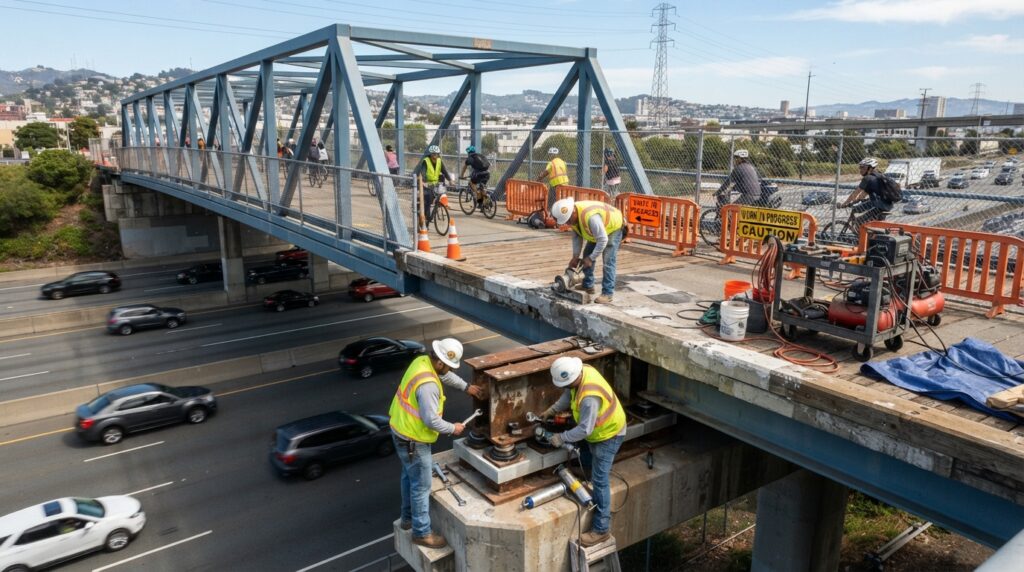
Crews are replacing bearing pads at two abutments, treating the bridge deck to reduce water intrusion, cleaning and repairing areas where paint has chipped or rust has appeared, and repairing damaged concrete around sidewalks and curbs.
Additional maintenance includes replacing pedestrian restriction cabling, pressure washing, removing debris, and trimming vegetation around the structure.
These tasks explain why a multi-month closure is needed even though the finished bridge may look mostly familiar when it reopens.
Infrastructure maintenance is often less visible than building a new trail, but it is necessary to keep heavily used walking and cycling connections functional over time.
How to Plan Around the Iron Horse Trail Closure
The easiest strategy depends on why you use the trail.
A recreational cyclist can choose another section of the Iron Horse Trail or switch to a different regional route. A commuter may still need this exact connection and should build extra crossing time into the trip.
Families, runners, mobility-device users, and people traveling with pets should also consider whether the temporary street-level crossing fits their comfort level.
Do not assume the detour will add only a few seconds. Signals, traffic, construction activity, other trail users, and unfamiliar routing can all slow the crossing.
Build Extra Time Into Rides, Walks, and Commutes
If you continue using the Iron Horse Trail through Walnut Creek, approach Treat Boulevard expecting an interruption.
Slow down as soon as temporary signs appear. Keep enough distance from the person in front of you, especially on a bicycle.
Parents riding with children may want to stop before the detour, explain the crossing, and keep the group together rather than trying to make decisions while moving.
Runners and walkers should pay attention to bicycles approaching from behind because people may be changing speed or position unexpectedly near the closure.
After dark, visibility deserves more attention. Use bicycle lights and reflective equipment, and avoid assuming drivers have already seen you simply because you have the signal to cross.
The Iron Horse Regional Trail is generally open between 5 a.m. and 10 p.m. unless another notice or permit changes those hours. Still, temporary construction conditions may affect specific sections, so checking current alerts remains important.
If you decide to avoid the area completely, other paved routes in the county include the Contra Costa Canal Regional Trail, Lafayette-Moraga Regional Trail, and portions of the regional trail network farther east and west.
Our Contra Costa trail safety guide also explains why current closure notices, route conditions, weather, and backup plans should be checked before outdoor trips rather than after arriving at a trailhead.
Check the Official Closure Status Before Every Longer Trip
The December 31 date is the current construction target, not a guaranteed reopening date.
Weather, hidden bridge conditions, material availability, or other construction issues could change the schedule.
Likewise, temporary nighttime road-closure dates may be announced or adjusted while work continues.
Before a long ride, commute, or group outing, check the official project information instead of assuming the bridge has reopened because the calendar is close to the end of December.
The East Bay Regional Park District also posts trail alerts and closure notices for the Iron Horse Regional Trail.
For the latest construction schedule, detour map, road-closure information, and project updates, visit the official Contra Costa County Robert I. Schroder Pedestrian Bridge project page.
Iron Horse Trail closure
The current Iron Horse Trail closure is inconvenient, especially for riders and walkers who use the bridge regularly. However, most of the regional trail remains open, and the Treat Boulevard interruption can be managed with a little planning.
Expect the street-level detour. Slow down near construction signs. Allow additional time. Use extra caution around traffic. Check for nighttime road closures if you are driving through the area.
Most importantly, confirm the bridge status before relying on the original December 31 completion date.
Once rehabilitation is complete, the Robert I. Schroder bridge should again provide the grade-separated connection that makes this section of the Iron Horse Trail so useful for everyday recreation and transportation through central Contra Costa County.